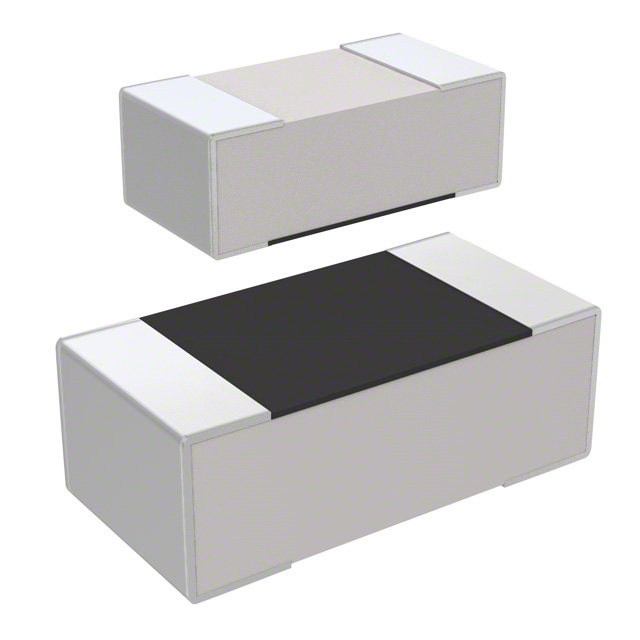






Tantalum and ceramic capacitors may look similar in a circuit, but they do not act the same. Their design affects stability, DC bias, frequency response, polarity limits, and reliability under stress. Because of this, choosing between them is not only about capacitance and voltage. This article gives information about their structure, performance, limits, uses, and selection steps.

Tantalum Capacitor vs Ceramic: What the Difference Means in Practice
Tantalum and ceramic capacitors both store and release electrical energy, but they behave differently in a circuit. Tantalum capacitors are polarized electrolytic capacitors, while ceramic capacitors are non-polar capacitors made with ceramic dielectric materials. This difference in construction affects capacitance stability, DC behavior, frequency performance, polarity requirements, and application suitability.
Even when the printed capacitance and voltage rating appear similar, these two capacitor types are not automatically interchangeable. Their real performance can vary with DC bias, temperature, aging, surge conditions, and operating frequency. Because of this, the better choice depends on the specific job the capacitor must perform in the circuit.
Construction and Performance Differences

Tantalum and ceramic capacitors use very different internal structures, and those structural differences strongly affect how they behave in circuits. The tantalum capacitor uses a tantalum anode with a tantalum pentoxide dielectric and a surrounding cathode system, which helps it deliver relatively high capacitance in a compact body with more stable capacitance under applied voltage. This makes its electrical behavior more predictable in many steady filtering and decoupling conditions.
The ceramic capacitor is built from many stacked ceramic dielectric layers with internal metal electrodes. This multilayer design supports small size, low resistance, and strong high-frequency performance. However, its actual capacitance can change more with voltage, temperature, and material type, so real operating behavior may vary more than its nominal rating suggests.
Tantalum Capacitor vs Ceramic Performance Comparison
| Performance Factor | Tantalum Capacitor | Ceramic Capacitor |
|---|---|---|
| Capacitance stability | More stable under DC load | Depends on the dielectric type |
| DC bias effect | More predictable | Often significant in Class 2 types |
| Aging | More stable over time | Class 2 types can lose capacitance |
| High-frequency performance | Good, but not usually best for very fast noise | Excellent |
| Inductance | Higher than many MLCCs | Very low |
| Temperature stability | Often reasonably stable | Strong in Class 1, weaker in Class 2 |
Operating Limits and Stress Conditions
Polarity and Installation Limits
Tantalum capacitors are polarized, so they must be installed in the correct direction. Reverse voltage or incorrect placement can damage the part and increase failure risk. Because of this, they are used where polarity remains controlled.
Ceramic capacitors are non-polar, so they do not have the same installation limit. This makes them more flexible in circuits where voltage direction may vary.
Stress Conditions and Limits

Tantalum capacitors are more sensitive to surge current, inrush current, and low-impedance conditions. When these stresses are not controlled, failure risk increases. For that reason, proper derating is often basic in power-related use.
Some ceramic capacitors, especially certain MLCC types, can produce audible noise because the material may vibrate during operation. This is not a failure issue, but it can still be a practical limit in some circuits.
Different Application Areas
When Tantalum Capacitors Are a Better Fit
Tantalum capacitors are often chosen when a circuit needs relatively stable capacitance under DC bias and limited board space is available. They are commonly used as local bulk capacitors on low-voltage power rails, after regulators, or near PMIC outputs where polarity is fixed and the design needs more predictable capacitance than many Class 2 ceramic capacitors can provide. They are also useful in compact portable electronics where board area is tight but some bulk energy storage is still needed.
When Ceramic Capacitors Are a Better Fit
Ceramic capacitors are more suitable for high-frequency bypassing, fast transient decoupling, and low-inductance filtering near IC power pins. They are widely used around microcontrollers, processors, RF circuits, and switching regulators because they respond quickly to fast current changes and perform well at high frequency. Their non-polar construction also makes them easier to use in signal paths, AC-related positions, and circuits where voltage direction may vary.
When Both Types Are Used Together
In many practical designs, tantalum and ceramic capacitors are not treated as direct alternatives but as complementary parts. A ceramic capacitor is often placed close to the IC to handle high-frequency noise, while a tantalum capacitor is added on the same rail to provide bulk capacitance and support slower load changes. This combination is common in power distribution networks, embedded boards, and mixed-signal systems where both fast response and stable usable capacitance are needed.
How to Choose the Right Capacitor Type
Define the Capacitor’s Job
Start by deciding whether the capacitor is mainly needed for bulk storage, filtering, decoupling, timing, or noise suppression. Tantalum is often a better fit for stable bulk capacitance, while ceramic is often better for very fast filtering and bypassing.
Check Working Capacitance
Look at how closely the capacitor must stay to its marked value during operation. Many Class 2 ceramic capacitors can lose capacitance under DC bias. If that drop is not acceptable, tantalum may be the better choice.
Review Voltage, Surge, and Polarity Conditions
Check whether the circuit has strong inrush current, pulse stress, or uncertain polarity. Tantalum needs more care under these conditions, while ceramic is often easier to use when non-polar operation is important.
Consider Long-Term Stability
Check how important it is for capacitance to remain steady over time. Class 1 ceramic capacitors are stable, but Class 2 types can change more. Tantalum is often chosen when more predictable long-term capacitance is needed.
Check Frequency Needs and Special Limits
Ceramic capacitors usually perform better at high frequency. Tantalum is better when the main need is stable capacitance rather than very fast response. Also review possible limits such as ceramic acoustic noise or the need for extra derating with tantalum.
Conclusion
Tantalum and ceramic capacitors have different strengths, so they are not always interchangeable. Tantalum is often better for stable bulk capacitance and more predictable DC behavior, while ceramic is often better for high-frequency bypassing, low inductance, and non-polar use. The right choice depends on the capacitor’s job, working capacitance, polarity, stress conditions, long-term stability, and frequency needs. These factors decide how well the part performs in practice.
Frequently Asked Questions [FAQ]
When is a tantalum capacitor the better choice?
When the circuit needs compact bulk capacitance, stable capacitance under DC load, and more predictable long-term behavior.
Why can a ceramic capacitor with the same marked value behave differently in real use?
Because many ceramic capacitors, especially Class 2 types, can lose capacitance under DC bias and can change more with temperature and aging.
Why is tantalum less flexible in some circuit positions?
Because it is polarized. If the voltage direction is uncertain or can reverse, ceramic is usually easier and safer to use.
Why does tantalum usually need more derating in power circuits?
Because it is more sensitive to surge current, inrush current, and low-impedance conditions.
Why is ceramic not automatically the better choice in every design?
Because it can lose working capacitance under DC bias, some types change more over time, and some MLCCs can produce audible noise during operation.